Resize Photos Without Quality Loss
Watermarkly’s free image resizer uses the most advanced interpolation method called Lanczos. It preserves tiny details and produces an image that’s sharp, crisp, and extremely clear.
Other photo resizers usually ask you to choose one of three or four resizing methods depending on the content of the picture – which can be quite confusing. But here you don’t have to worry about anything! Our Image Resize tool will handle it for you, while keeping the image quality as high as possible.
All you need to do is upload your photos and specify the settings for resizing.
Resize Image Online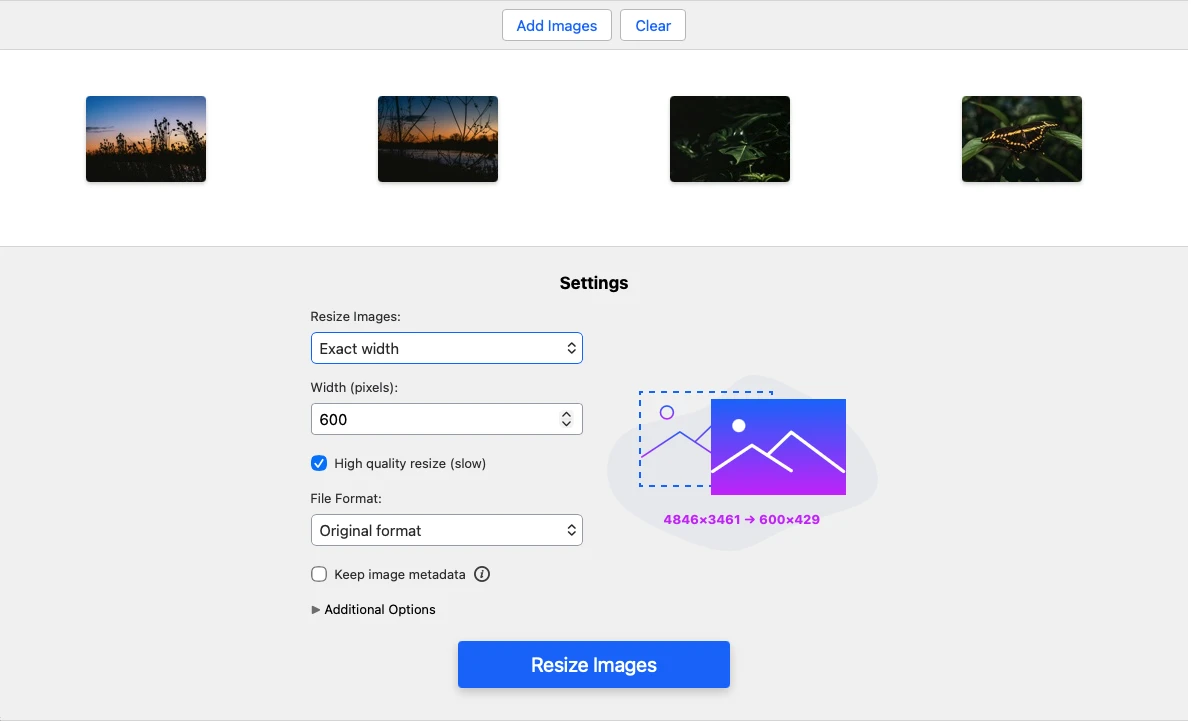
Resize Photos to Specific Dimensions
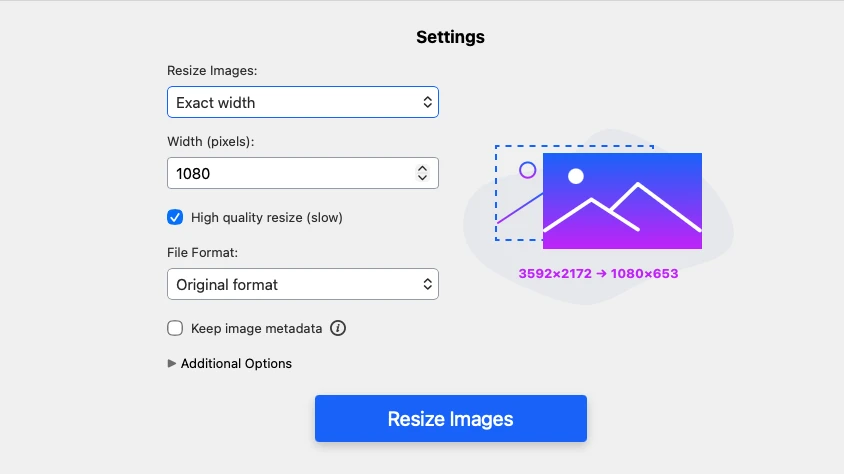
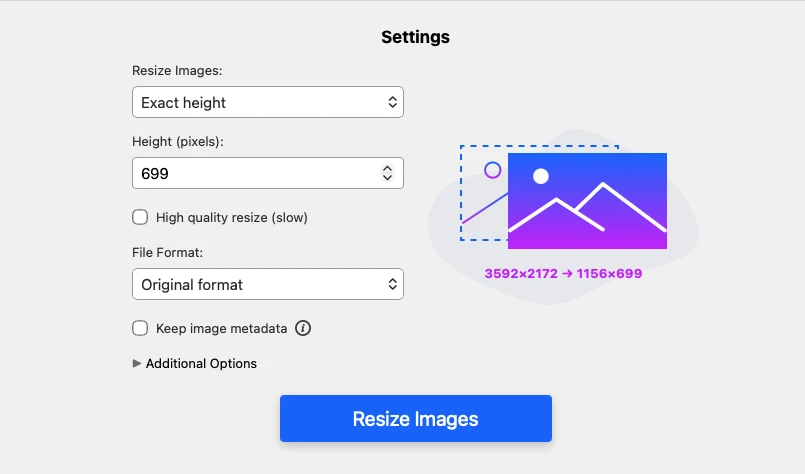
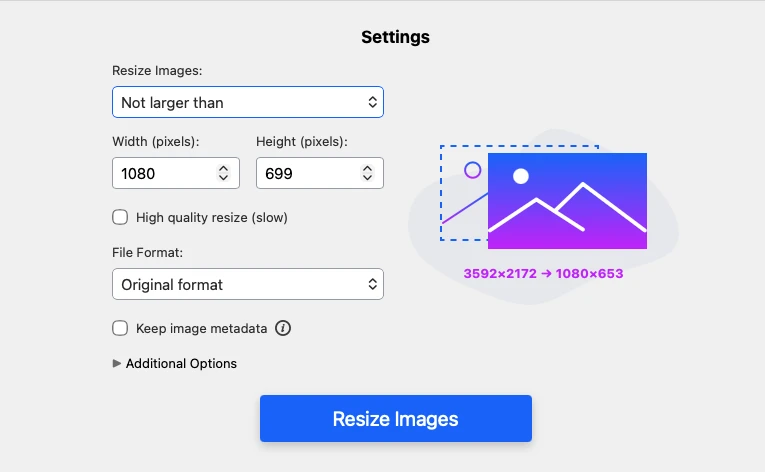
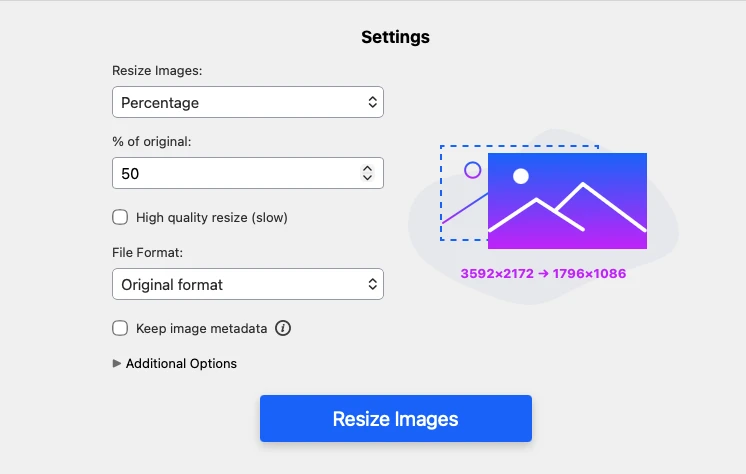
Our online tool offers a broad range of resizing options, allowing you to significantly speed up and simplify the image resizing process.
You can:
- Enter the Exact Width in pixels. The height will be changed automatically. The original aspect ratio will be maintained.
- Enter the Exact Height in pixels. The width will be changed automatically. The original aspect ratio will be maintained.
- Enter the Exact Width & Height. The aspect ratio may be changed.
- Set the maximum size in pixels for your image. The original aspect ratio will remain unchanged.
- Set the minimum size in pixels for your image. The original aspect ratio will remain unchanged.
- Specify the Percentage. By default, your original image is 100%. So, if you enter 80%, your image size will decrease by 20%.
- Set Specific File Size in Kb. Go for this option if you mainly need to reduce the file size of your image.
Custom Image Size and Aspect Ratio
When resizing images, aspect ratio matters just as much as pixel dimensions. If you ignore it, your images might end up disproportionately stretched and distorted.
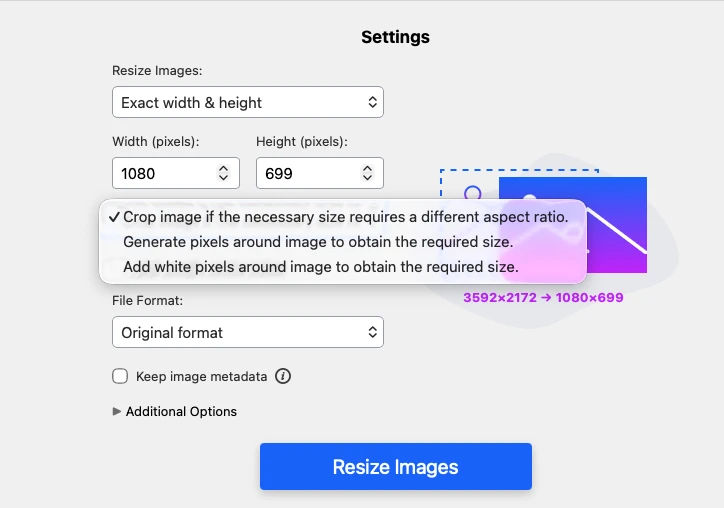
Watermarkly’s image resizer can help you avoid this issue. If the new pixel dimensions require the aspect ratio of your photo to be changed, the app will offer 3 options to choose from.
You can:
- Crop the image. Everything in the center will be kept, while the edges of the photo will be cropped. Note that you won’t be able to adjust the cropping area.
- Generate blurred pixels around the image. The original image will remain as is, while blurred pixels will be added along the sides to fill the “empty” space.
- Add white margins. Instead of blurred pixels, white borders will be added around the image. This will keep the entire image intact, while changing the aspect ratio.
How to Resize a Photo With Watermarkly
Go to Watermarkly’s website > Tools > Resize Photos. The app sits at the top of the page – you can get to resizing your photos right away!
1. Upload one or several images
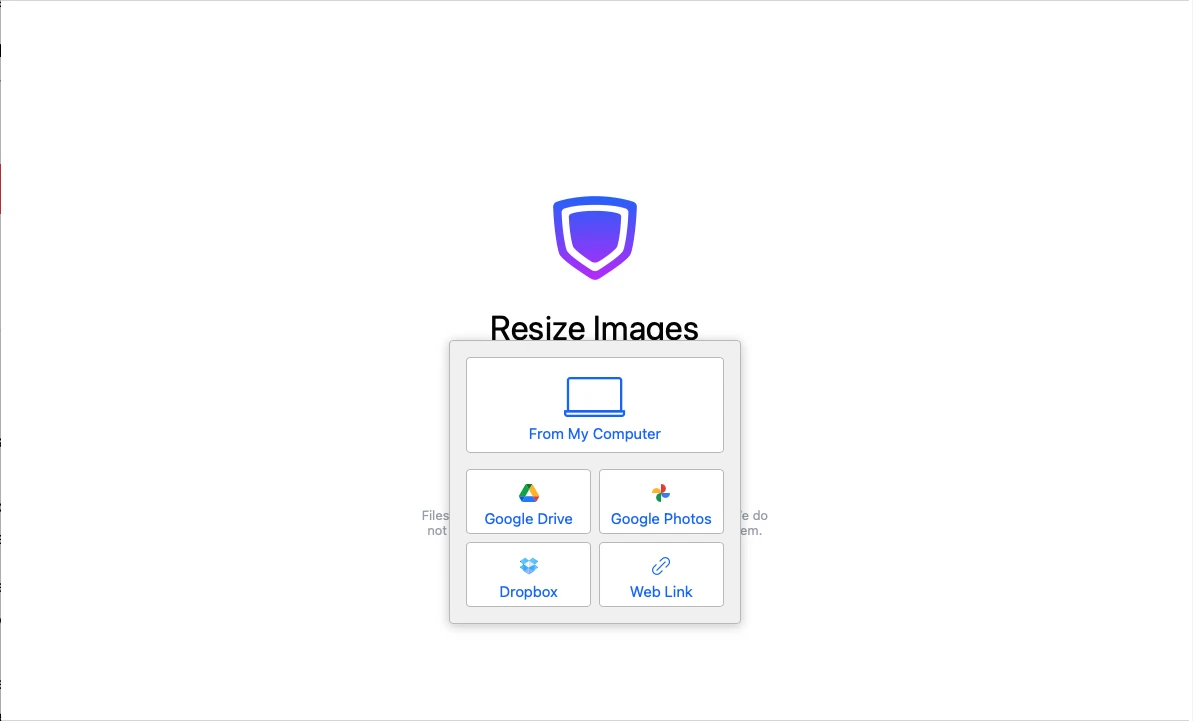
Click on "Select Images" or drag and drop your photos into the photo resizer using your cursor. You can upload photos from your device, Google Drive, Google Photos, DropBox, or webpage.
2. Adjust the settings
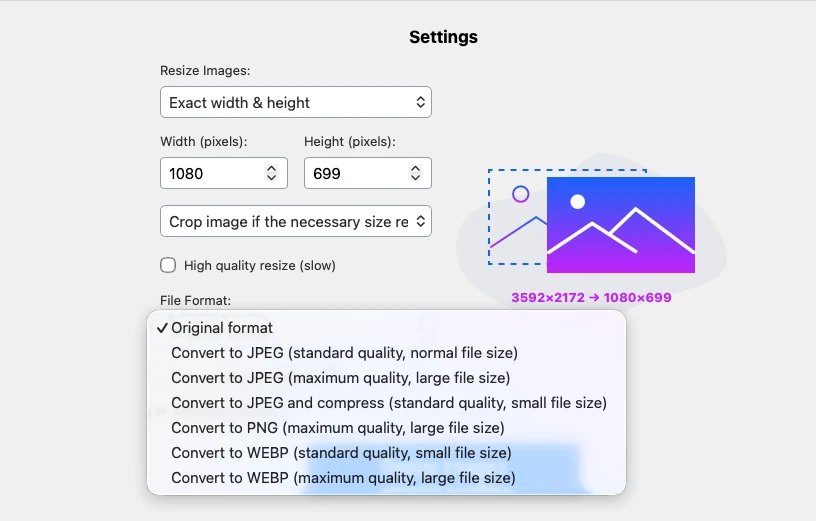
Once the images are uploaded, you can specify how you want to resize them – select the necessary resizing option and enter the new values. The resizing settings will be applied to all photos in the batch. You'll see a side-by-side preview of the original and new sizes in the settings panel.
Additionally, you can:
- Change the file format to JPEG/PNG/WebP
- Keep the image metadata
- Rename files.
- Blur faces.
- Blur license plates.
3. Export the final files
When you are done adjusting the settings, click Resize Images. You can then download the images individually, save them as a ZIP folder, or transfer them directly to a cloud storage.
Resize Image OnlineWhy Images May Look Distorted After Resizing
If resizing an image suddenly results in a significant deterioration in its quality, it's worth understanding what exactly might have caused this.
Here are some things that you need to pay attention to when resizing a photo.
Pixel Dimensions of the Original Photo
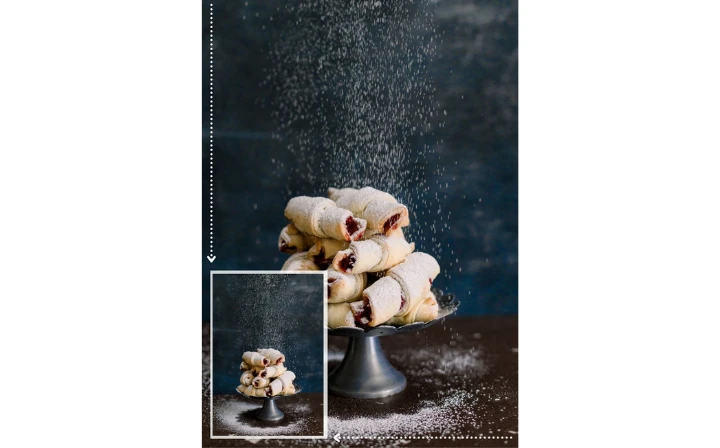
Starting with a high-resolution image and reducing its size leads to excellent results. More pixels equal more visual information — more texture, more detail, more edges, and more color transitions. When you make an image smaller, your software merges similar pixels together. If you start with a lot of pixels, the algorithm has more data to work with, so the final result looks cleaner and sharper. Hence, start with the highest resolution you have.
The Original Aspect Ratio
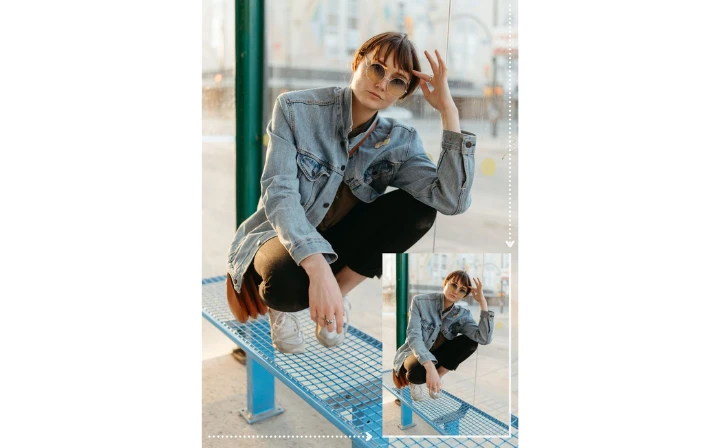
Changing the pixel dimensions without maintaining the original aspect ratio may cause the image to distort disproportionately. Circles will become ovals. Faces and other objects will appear unnaturally compressed or stretched.
Most online image resizers maintain the original aspect ratio automatically. But some editors require you to turn on an option like “Lock Aspect Ratio” or “Scale Proportionally.” So always make sure it’s enabled before resizing.
In Watermarkly’s photo resizer the aspect ratio can be changed only when you choose the “Exact Width & Height” option. It will be locked automatically for all the other resizing options.
The Interpolation Method
Interpolation is a process used for resizing images. When reducing the image size, it determines which pixels to keep and how to blend them so the image doesn’t lose too much detail.
There are several interpolation methods you’ll typically see in image resizers:
- Nearest Neighbor
- Bilinear
- Bicubic
- Lanczos.
For the best image quality in most cases, choose Bicubic or Lanczos.
Nearest Neighbor is fast, but it often produces blocky and pixelated results. Bilinear is smoother, but still blurrier than Bicubic.
Drastic Resizing
It is better to avoid reducing the image size too drastically in a single step. If you need to resize by more than 2 times, it’s better to do it gradually to avoid quality loss. When you resize an image dramatically — for example downscale it by 8 times in one step — the software has to do a lot of processing and guessing, and that usually destroys fine details, edges, and textures.
Before or After Image Editing
You should resize your image only after you’ve finished all your editing. In other words, if you need to add text, a logo, a watermark, or any graphics, make sure you do that on the high-resolution original, before you scale it down.
Why?
Text and logos contain sharp edges and tiny details. That’s something your image software treats as high-frequency information — really precise shapes and lines.
If you add text or a logo to a low-resolution image, those edges will get blurry. You’ll see fuzzy letters and weird stroke thickness that looks uneven or too thick.
But if you add your watermark or logo before resizing, while the image is still high-res, all of those sharp edges will decrease seamlessly. You’ll get crisp details even in the final, smaller version.
Resize Image OnlineFAQ
How to resize an image for free?
Try Watermarkly’s photo resizer. It’s a free online tool that allows you to resize multiple images at a time. It doesn’t show ads, doesn’t require sign-up, and doesn’t put watermarks on the resized images. Moreover, the quality of the images after resizing will be just as high as when processed in the paid version.
How to resize an image without losing quality online?
To avoid quality loss, start with a high-resolution original, maintain the aspect ratio, and use advanced interpolation methods such as Bicubic or Lanczos.
Additionally, you can apply certain techniques to achieve better results. For example, resize the photo gradually, or in some cases, crop it instead of resizing.
If you’d like to dive deeper into this topic and learn how to resize images without sacrificing quality, we highly recommend watching our dedicated video on the subject:
How to resize photos on a mobile phone?
Open the browser of your choice on your phone, go to watermarkly.com > Tools > Resize Photos. You’ll see the app’s window right away. Upload photos from the Photos gallery or other storage locations and choose the necessary resizing method. After resizing, your photos can be exported to the Files, Google Photos or Dropbox. With our image resizer, you can resize photos on iOS or Android devices just as quickly and effortlessly as on a desktop computer.
Is Watermarkly’s photo resizer safe and secure?
Yes, absolutely. Watermarkly’s image resizer is a web-based application. You don't need to install anything on your computer. The photo resizer works in your browser and doesn’t require any additional software or plugins. We neither store your images on our servers nor have access to them. Nobody in our company can get access to your files, no matter what.
Does this free photo resizer have any limits?
The only limit is that you can process a maximum of 10 images per day. There is no need to upload one photo after another. You can resize all the images in one go and use them right away. There won’t be any watermarks on resized copies.
4. Can I resize images of different formats?
Yes, you can upload all your images in a single batch or use one of our dedicated resizing tools: