How to Choose a Camera Lens: Ultimate Guide for Beginners
by  Lina Thorne • Updated · Posted in Photography
Say, you’ve purchased your first interchangeable lens camera. And now you also need to get your first lens. You go to a camera store and…suddenly, there are numbers and letters and a dizzying array of choices. It can feel incredibly overwhelming and confusing.
Don’t worry! In this comprehensive guide for beginners, you’ll find all the key info on how to choose a camera lens.
We’ll explain what a focal length and an aperture are, as well as the difference between prime and zoom lenses. There are also some general recommendations that can help you get started.
By the end, you’ll understand what really matters when selecting a lens and feel much more confident about your decision.
Why Lenses Matter So Much
It’s tempting to believe that a better camera body automatically means better photos. But in reality, lenses play a much bigger role in how your images look.
The camera sensor captures the light that the lens projects onto it.
So, a lens is responsible for:
- Sharpness & Detail – A high-quality lens renders fine detail with clarity across the frame. A cheap lens will often be soft, especially at the edges, no matter how many megapixels your sensor has.
- Contrast & Colors – Better lenses have superior coatings and glass elements that manage flare, increase contrast, and produce richer, more accurate colors.
- Optical Flaws – Good lenses are engineered to minimize distortions (barrel or pincushion), chromatic aberration (color fringing), and vignetting (dark corners).
In other words, a great lens on an older camera will produce sharper, more beautiful images than a mediocre lens on the most expensive body. Moreover, a well-chosen lens can stay with you through several camera upgrades.
Most beginner cameras can often be purchased with a kit lens (something like 18–55mm). These lenses are convenient and affordable, but they usually:
- Produce less background blur
- Aren’t as sharp as higher-quality lenses
- Aren’t good for low-light photography.
If possible, skip the kit lens and invest in a good-quality lens instead. This is often the first real lesson in choosing a camera lens wisely.
Focal Length
Written in millimeters (mm), focal length determines how much of the scene you see and how your subject looks in the frame.
- A low number (e.g., 16mm) gives you a broad, sweeping view. With a wide-angle lens, you can include more details and context into your shot. Think of an establishing shot in a movie or a shot when you see not only the main character, but also where they are.
- A high number (e.g., 200mm) gives you a tight, narrow view. With a telephoto lens, you can get really “close” to your subject. Think of close-ups in movies.
But focal length isn’t just about getting “closer” or “wider.” It changes the relationship between your subject and its environment.
A wide-angle lens can make a small room feel vast. A telephoto lens can compress a city skyline, making the buildings look stacked on top of each other.
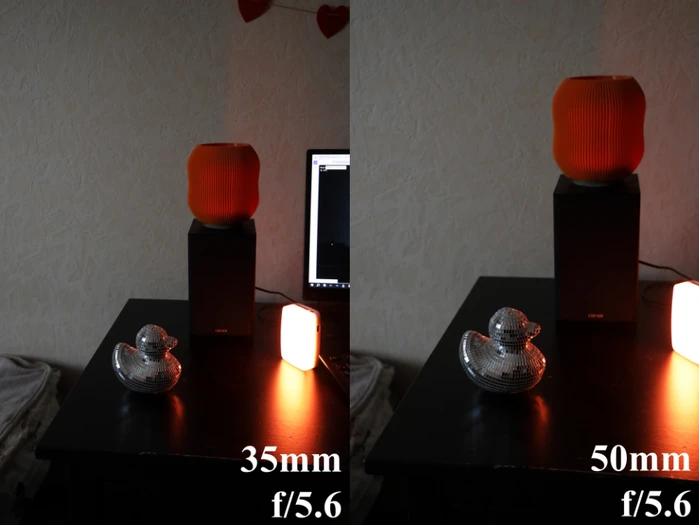
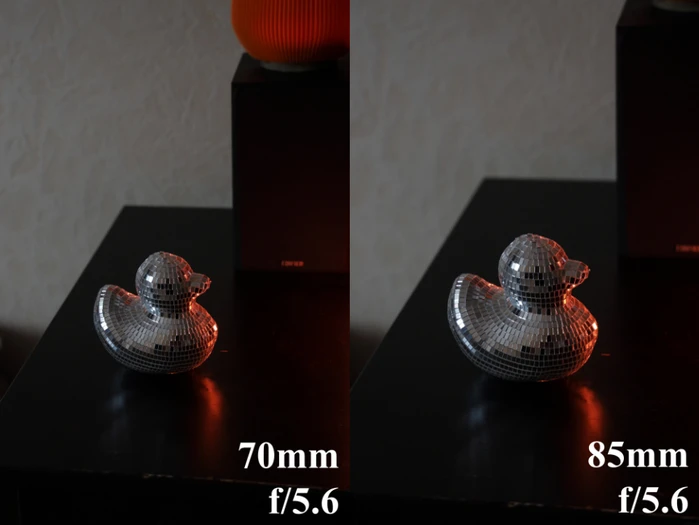
Here’s the comparison between different focal lengths. These were taken from the same spot using a Canon RF 24-105mm f/4 lens. The aperture stayed the same. Only the focal length changed.
Understanding Distortion
Lenses can distort the shapes of things, especially near the edges of the frame.
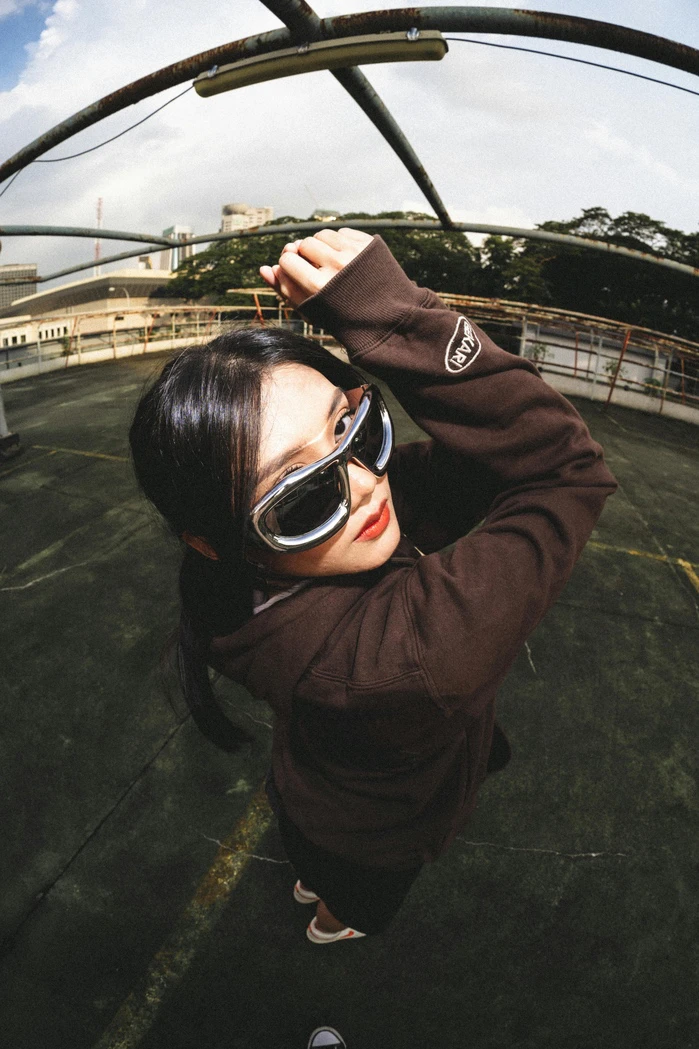
Wide-Angle Lenses (e.g., 16mm) create barrel distortion, where straight lines curve outward. They also exaggerate perspective: objects very close to the lens will look huge, while things just a few feet away will look small.

Telephoto Lenses (e.g., 200mm) compress and flatten a scene, creating pincushion distortion – lines curving inward. This makes mountains in the distance appear much closer to your subject.

Lenses around 85mm or 100mm on a full-frame camera are considered the “sweet spot” for traditional portraiture. That’s because they provide a comfortable working distance (you’re not in your subject’s personal space, yet you’re not too far away), and they capture facial features with minimal distortion.
But please note that these are guidelines, not unbreakable laws. Some portrait photographers use wide-angle lenses to create emotion and drama.
Aperture
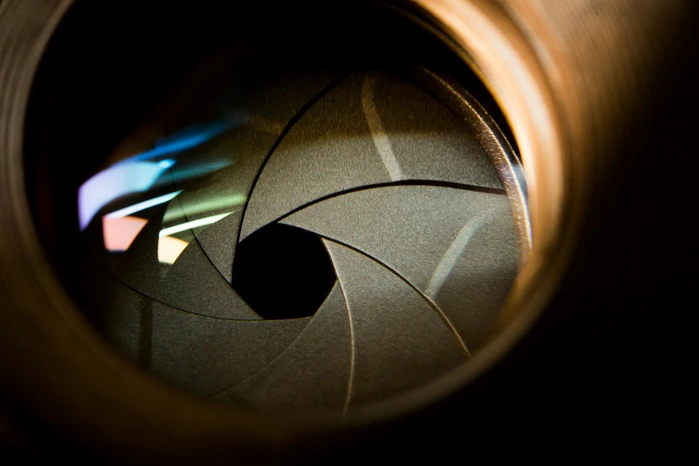
Aperture is a circular opening made of blades that can open wide or close down to a tiny pinhole. It’s measured in f-stops: f/1.4, f/2.8, f/8, f/16.
Why aperture matters:
- It allows you to let in more or less light. In a dark room or at dusk, you open the aperture wide (a low number like f/1.8) to let in a lot of light. On a bright beach, you close it down (a high number like f/11) to let in less light. A lens with a wide maximum aperture (e.g., f/1.4) is called a “fast” lens because it allows you to shoot with faster shutter speeds in low light.
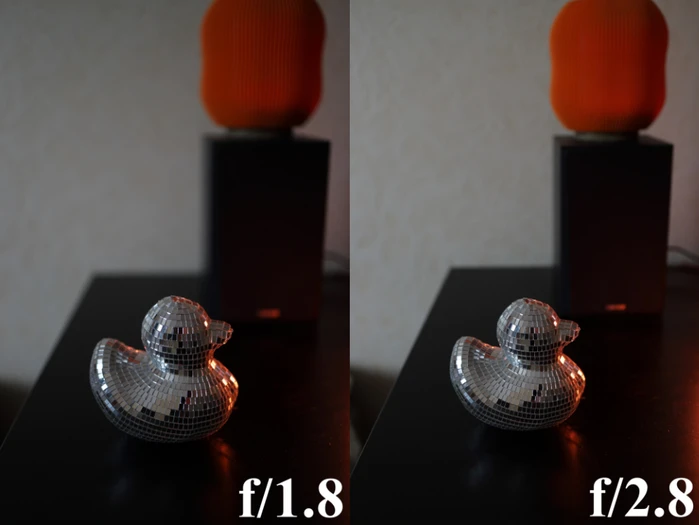
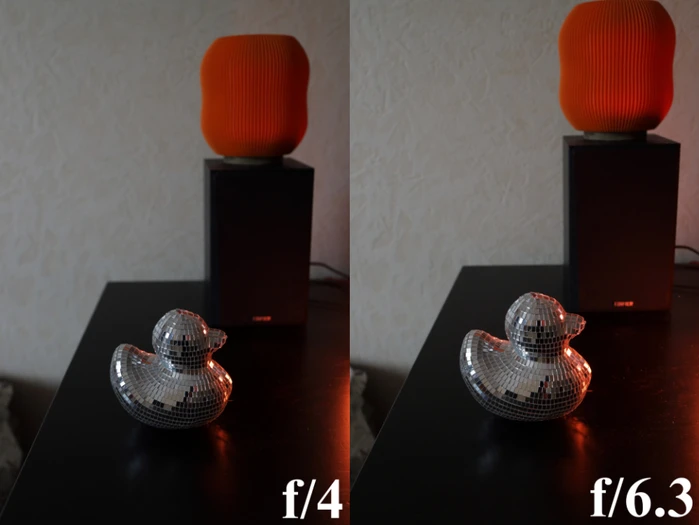
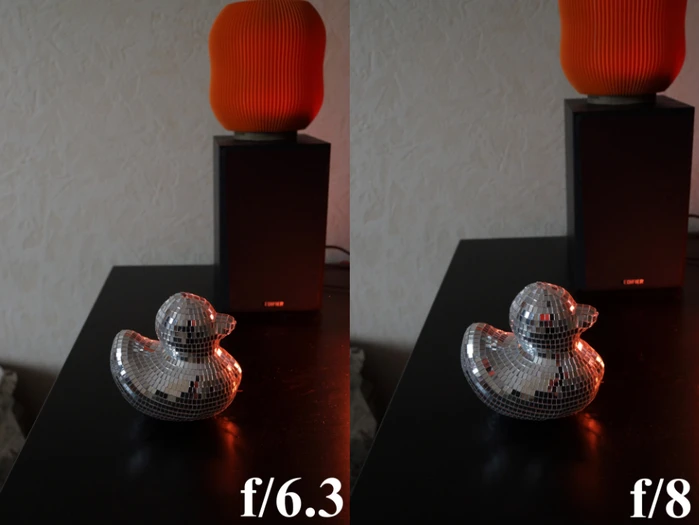
- It controls the depth of field. A wide aperture (like f/1.8) creates a shallow depth of field. This means only a small part of your image is in focus, and everything else is blurred. This is a great way to isolate your subject from the background. A narrow aperture (like f/16) creates a deep depth of field. Everything from the flower at your feet to the mountains miles away is in focus.
The following shots were taken using Canon RF 35mm f/1.8.
How do you get a beautiful bokeh?
“Bokeh” comes from the Japanese word for “blur.” It’s that out-of-focus background, often with soft, round highlights, that makes your subject pop. Here’s what you need to create it:
- A wide aperture (a low f-number like f/1.8, f/1.4, or f/2.8). The wider the aperture, the more pronounced this effect becomes.
- A longer focal length. Focal length affects background compression. So, a telephoto lens will produce more pronounced background blur at the same aperture than a wide-angle lens.
- Distance between you, your subject, and the background. You must get close to your subject. And your subject must be far from the background. If your subject is standing right in front of a wall, the wall won’t blur much. If they are 20 feet away from that wall, and you’re close to them, the wall will blur away into soft bokeh.
Prime vs. Zoom Lenses
Understanding this distinction is critical when choosing a camera lens, especially as a beginner.
Prime Lenses
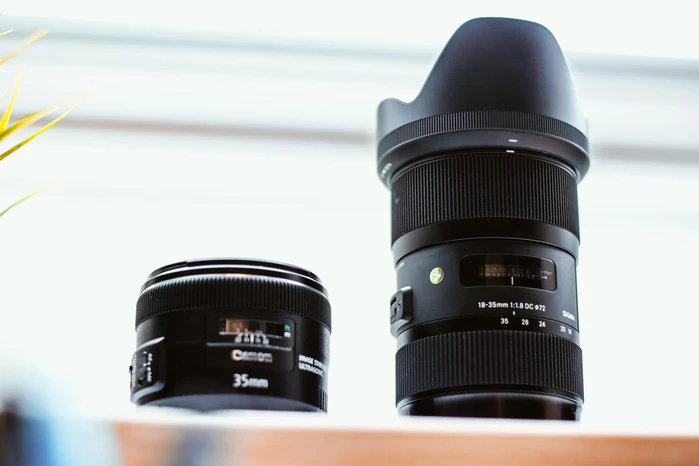
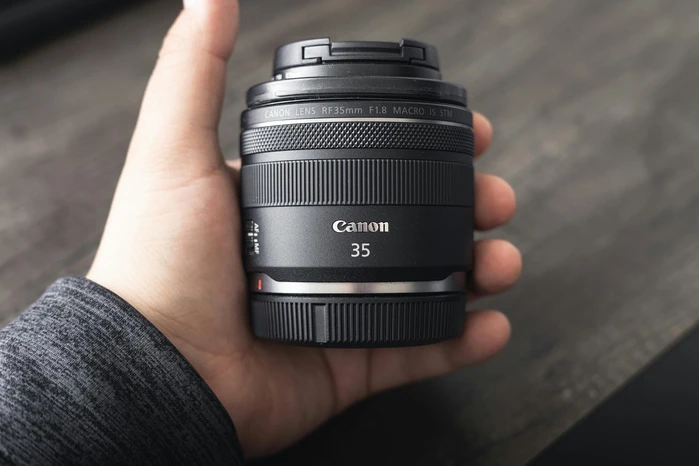
A prime lens has a single, fixed focal length. You cannot zoom in or out. You must get closer to your subject with your feet. Primes are designed to do one thing, and do it exceptionally well.
Pros:
- Superior Image Quality. With fewer moving optical elements, prime lenses are often sharper, have less distortion, and produce fewer optical flaws like chromatic aberration, especially when compared to a zoom lens in the same price range.
- Wider Maximum Apertures. It’s common to find primes at f/1.8 or f/1.4. This means that they perform well in low-light conditions. And with them, you’ll get an extremely shallow depth of field.
- Smaller, Lighter, and More Discreet. A prime like a 40mm f/2.8 pancake lens can be tiny. This means you’ll be less intimidating to your subjects and your kit will be easier to carry – perfect for street or documentary photography.
- Often More Affordable. While high-end primes are expensive, the entry-level primes (like a 50mm f/1.8) offer amazing performance at a remarkably low cost.
Cons:
- No Flexibility. If your subject is too far or too close, you must change your physical position or change lenses. In fast-paced or confined situations (like a wedding ceremony), this can mean missing a shot.
- Requires More Lenses. To cover different focal lengths, you need multiple prime lenses, which means carrying more gear and swapping them frequently.
Who Are Primes For?
- Photographers who prioritize image quality and low-light capability.
- Portrait, studio, and fine-art photographers.
- Anyone wanting to learn composition (they force you to think about framing).
- Those who value a lightweight, minimalist kit.
Zoom Lenses
A zoom lens has a variable focal length range, allowing you to frame your shot by twisting the zoom ring. Zooms are about versatility and convenience. They allow you to adapt to the scene quickly without moving or changing gear.
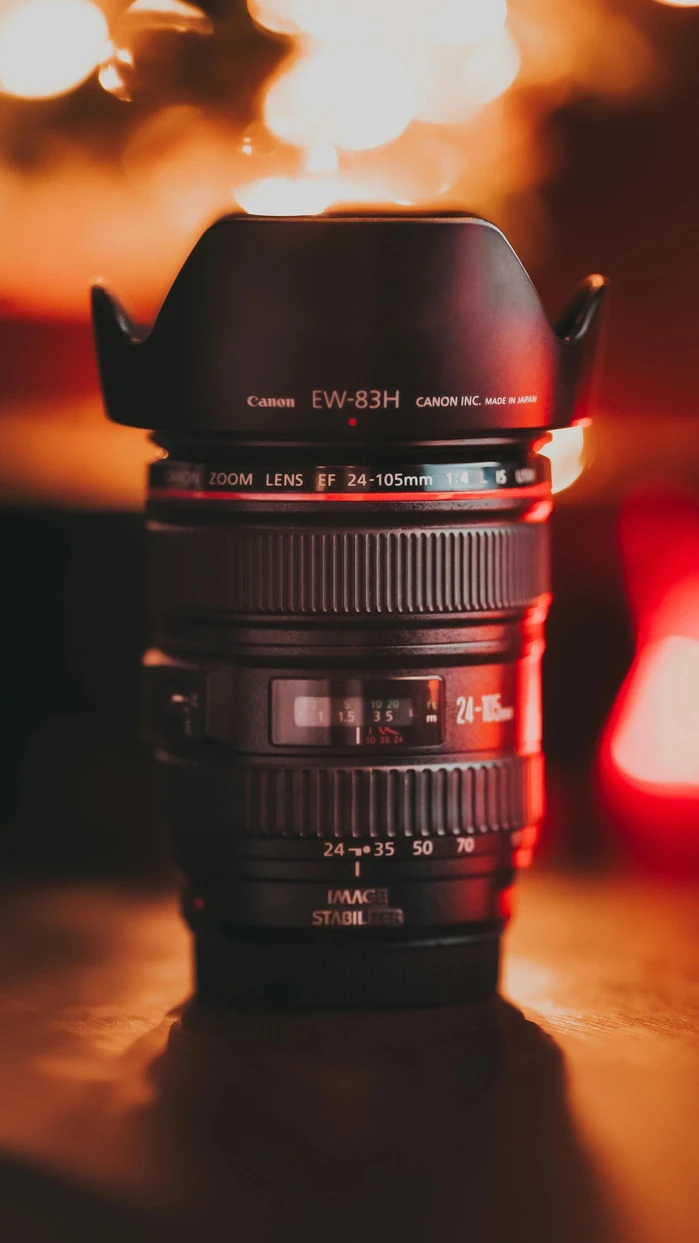
When it comes to zoom lenses, you need to know that there are two types:
- Constant Aperture Zoom (e.g., 24-70mm f/2.8). The maximum aperture (f/2.8) stays the same throughout the entire zoom range. These are professional-grade, larger, heavier, and much more expensive.
- Variable Aperture Zoom (e.g., 18-55mm f/3.5-5.6). The maximum aperture changes as you zoom. At 18mm, you might have f/3.5, but at 55mm, it “closes down” to f/5.6. This reduces size and cost but limits your control in low light as you zoom in.
Pros:
- Unmatched Flexibility. With a twist of your wrist, you can go from a wide-angle shot of a group to a tight portrait, or quickly recompose a shot from a fixed position (like behind a barrier at an event or from a viewpoint). Afterall, zooming in with your feet isn’t always possible.
- Fewer Lens Changes. You can cover a huge variety of shots with one or two zooms. This is crucial for events, weddings, travel, and photojournalism where moments are fleeting and you can’t afford to fumble in your bag.
Cons:
- Optical Compromise. To achieve that flexibility, zoom lenses have more complex optical designs with many moving elements. This often results in slightly softer images, more distortion, and vignetting compared to a prime in the same price bracket (though high-end zooms are incredibly sharp).
- Smaller Maximum Apertures. Except for expensive pro zooms, most have smaller maximum apertures (like f/4 or variable f/3.5-5.6), limiting low-light performance and background separation.
- Bigger, Heavier, and More Expensive. The flexibility comes at a cost. A professional f/2.8 zoom is a significant investment and a heavy piece of kit to carry all day.
Who Are Zooms For?
- Event, sports, and wedding photographers who need to react instantly.
- Travelers and hikers who need to minimize weight and lens changes.
- Landscape and street photographers who want to quickly explore compositions from a single vantage point.
- Beginners who are still discovering their preferred focal lengths.
For many beginners, a zoom lens offers a practical and forgiving way to choose a camera lens while still exploring different styles.
Don’t Overlook These Important Features
Minimum Focus Distance.
To put it simply, if you get to your subject closer than the minimum focus distance, the lens won’t be able to focus. All lenses have this, but a macro lens has an exceptionally short minimum focus distance.
Image Stabilization (IS) / Vibration Reduction (VR) / Optical SteadyShot (OSS).
This is a game-changer, especially for handheld shooting. It’s a mechanism inside the lens that physically moves elements to counteract the shake from your hands. It allows you to shoot at much slower shutter speeds without introducing blur.
Types of Lenses Explained
- Standard Lenses (35mm - 85mm). They “see” the world with a perspective very similar to that of the human eye. They’re lightweight, unobtrusive, and perfect for everyday storytelling, street photography, and environmental portraits.
- Wide-Angle (14mm-35mm). By capturing a much broader field of view, they’re essential for landscapes, architecture, interiors, and group shots taken in tight spaces.
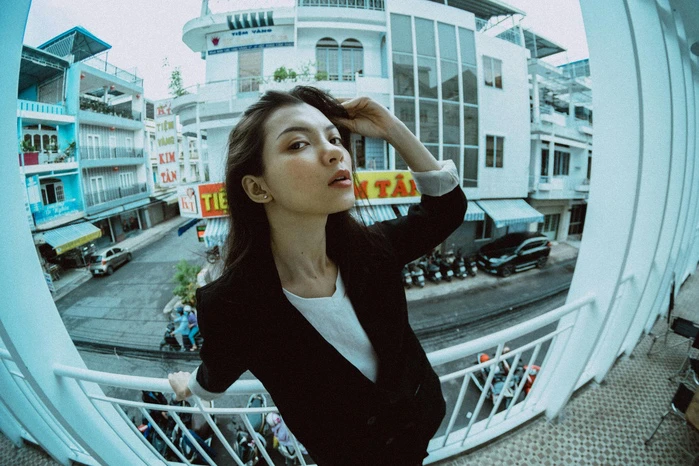
- Fisheye (8mm-15mm). An ultra-specialized type of wide-angle lens that produces a spherical view, creating unique, dramatic, and often abstract images.
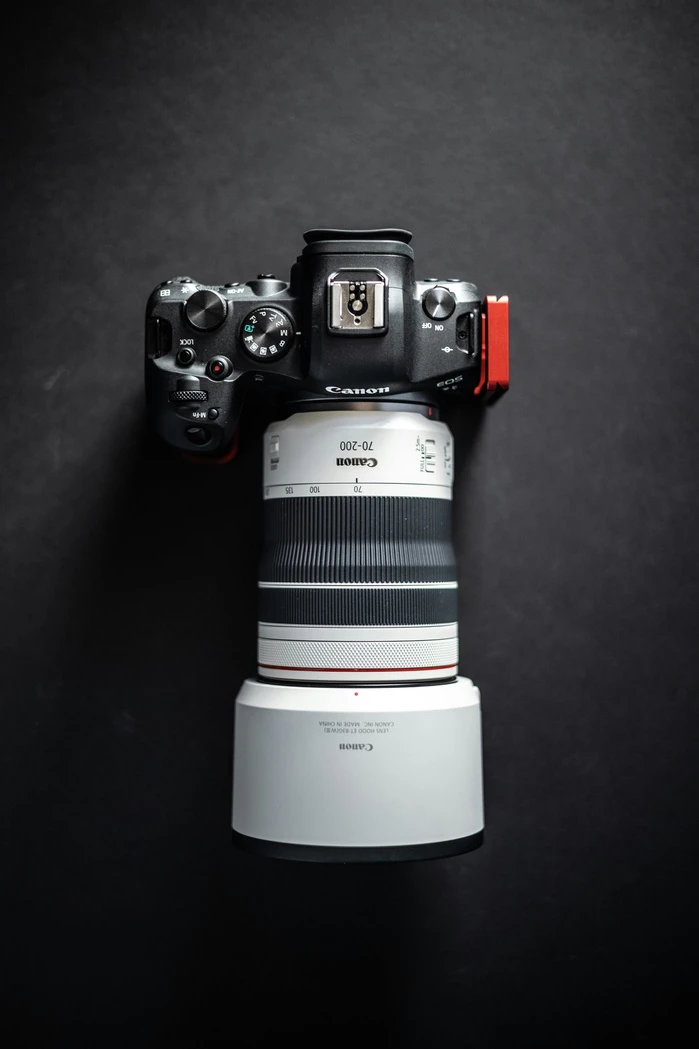
- Telephoto (70mm-200mm). They bring distant subjects closer, perfect for sports, wildlife, and candid portraiture.
- Super Telephoto (300mm+). Essential for wildlife, bird, and serious sports photography where you can’t get physically close.
- Macro (90mm, 100mm). Macro lenses are engineered for extreme close-focusing capabilities, allowing you to photograph tiny subjects like insects, flowers, or product details at life-size magnification.
Sensor Size & Mounts
This is how you’ll be able to figure out whether a lens will fit your camera.
1. Sensor Size & The Crop Factor
Your camera has either a full-frame sensor (the digital equivalent of old 35mm film) or a smaller crop sensor (APS-C, Micro Four Thirds).
- On a full-frame camera, a 50mm lens gives you a true 50mm field of view.
- On an APS-C crop sensor, that same 50mm lens has a crop factor (usually 1.5x). So, it gives you a field of view equivalent to a 75mm lens (50mm x 1.5) on a full-frame camera. Your wide-angle becomes less wide, but your telephoto gets extra “reach!”
- Micro Four Thirds has a 2x crop factor. A 25mm lens gives a 50mm equivalent view.
On top of that, there are lenses that can be used on both full-frame and crop sensors. And there are also lenses that can be used only on crop sensors. If you put a crop-sensor lens on a full-frame camera, you’ll get heavy vignetting.
If you want to learn more about sensor sizes and camera bodies, check out our guide on Best Camera for Beginners in 2026.
2. Lens Mounts
A lens connects to a camera physically and electronically via a lens mount. Different camera brands have different mounts - Canon RF, Nikon Z, Sony E, etc. So, you need to get a lens for your camera’s mount. Additionally, adapters exist to use older lenses on new bodies, but they may limit autofocus speed.
For instance, the Canon R6 camera has the RF-lens mount. It means that you’ll need a Canon RF lens or get an adapter to adapt a Canon EF lens to the RF lens mount.
Budgets, Brands, and The Vintage Charm
You have options!
First-party lenses (Canon, Nikon, Sony) offer guaranteed compatibility and performance but can be pretty expensive.
Third-party lenses are a brilliant alternative, frequently matching or even surpassing the quality of brand-name lenses for less money. Sigma’s “Art” series and Tamron’s “Di III” lenses for mirrorless are incredibly popular for this reason. But always check compatibility first! For instance, there are barely any third-party lenses for the Canon RF lens mount.
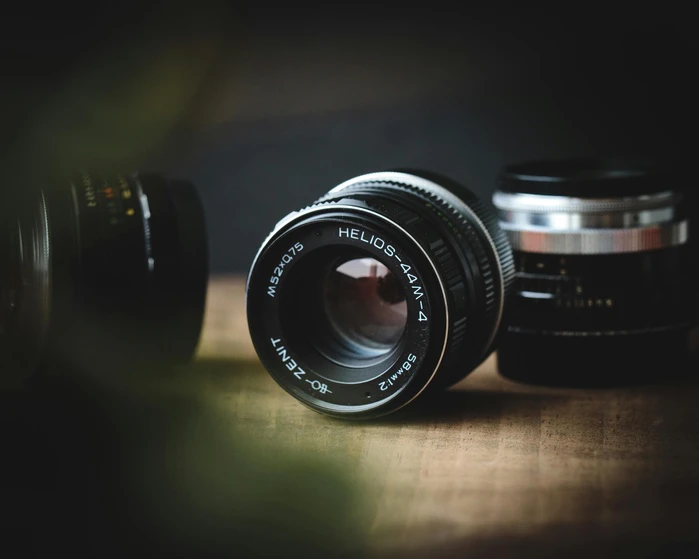
On top of that, you can opt for a vintage lens. Old manual-focus lenses from brands like Pentax, Olympus, or Soviet-era manufacturers are having a moment because they are often affordable and offer beautiful bokeh.
But you’ll need an adapter and to learn how to focus manually. The rise of mirrorless cameras makes this easier, though, thanks to a feature called focus peaking. When you turn the manual focus ring, focus peaking highlights the edges that are in focus with a colored shimmer on your screen.
Best Camera Lens Recommendations
Please note that these are general recommendations. The best camera lens for you is the one that matches your creative vision.
- Best camera lens for portraits: 85mm f/1.8 or a 50mm f/1.8. A 35mm can be great for group shots.
- Best camera lens for landscapes: 16-35mm f/4.
- Best camera lens for street photography: 35mm f/2.
- Best camera lens for travel: 24-105mm f/4.
- Best camera lens for sports/action: 70-200mm f/2.8.
- Best camera lens for weddings: A 24-70mm f/2.8 zoom paired with a fast prime like an 85mm f/1.4.
- Best camera lens for wildlife: A 100-400mm or 150-600mm super-telephoto zoom.
- Best camera lens for Macro photography: 100mm f/2.8 Macro.
- Best camera lens for astrophotography: A wide, fast prime like a 20mm f/1.8 or 24mm f/1.4.
- Best camera lens for food photography: A 50mm f/1.8 paired with an 85mm f/2.8 Macro.
Tips for Beginners
- A lens that suits every photographer doesn’t exist. We all shoot different things, in different conditions, with different creative goals. That is why choosing a camera lens is always a personal decision.
- Look at the photos you love, whether on Instagram or in magazines. Photographers often list their gear. Noticing a pattern in the lenses used for your favorite styles can be a huge clue to what might work for you.
- If you’re unsure, renting a lens is one of the smartest things you can do. Even a few hours can tell you a lot. Borrow a lens from a photographer-friend, if possible.
- As you shoot more, you’ll naturally figure out what you want more of – better low-light performance, more reach, or wider views.
Wrapping Up
Hopefully, now you have a better understanding of all those numbers and specs. Choosing a lens is an exciting step in your photography journey. It’s about finding the tool that allows you to actually create images you envision.
Start simple. Use your lenses often. Pay attention to what excites you and what frustrates you. Over time, your preferences will become clear, and your lens collection will naturally evolve with your photography. And remember – great photos come from curiosity, practice, and intention. Not just gear.